

What Is Sri Lankan Food? A Guide From a Sri Lankan Chef in Portland18 min read
Chef Kal Peiris · Blog

What Is Sri Lankan Food? A Guide From a Sri Lankan Chef in Portland

Discover what Sri Lankan food is from Chef Kal Peiris of Taste of Pearl. Learn about rice and curry, coconut-rich flavors, and how this cuisine works for events in Portland.

Chef Kal PeirisApril 5, 2026
Sri Lankan CuisineRice and CurryPortland CateringChef Kal Peiris

Updated April 5, 2026 · 18 min read

TL;DR
  • Sri Lankan food centers on rice served with multiple curries, coconut-based dishes, and bright sambols.
  • It differs from Indian cuisine through heavier coconut use, unique spice blends, and signature items like hoppers and kottu.
  • Naturally accommodates vegetarian, vegan, and gluten-free diets making it ideal for events.
  • Chef Kal Peiris brings these authentic flavors to Portland through Taste of Pearl catering.
Table of Contents

Are you curious about Sri Lankan cuisine and how it stands apart from other South Asian foods? This article will explain what Sri Lankan food is, who this guide is for, including Portland area readers, event planners, and food enthusiasts, and why understanding Sri Lankan cuisine matters.

Sri Lankan food includes a wide variety of ingredients and dishes, featuring coconuts, aromatic spices, and many vegan options, making it both diverse and inclusive.

Discover how Sri Lankan food is distinct from Indian food, why it is ideal for diverse diets, and what makes it culturally significant for both everyday meals and special events.

What is Sri Lankan food in simple terms?

Sri Lankan food is a coconut-rich, spice-layered cuisine built around the daily ritual of eating rice with multiple curries and condiments. It reflects centuries of Sinhalese, Tamil, Muslim, and Burgher traditions blended into something distinct from any neighboring cuisine. The goal is balance: creamy meets crunchy, heat meets cooling coconut, and bold spices meet fresh herbs.

The national meal of Sri Lanka is rice accompanied by a variety of distinct curries and accompaniments. Rice and curry is the staple meal in Sri Lanka, typically consisting of rice served with a variety of curries and side dishes that reflect the island's diverse culinary traditions. Rice is a staple food in Sri Lanka, often served with a variety of curries and side dishes.

Sri Lanka is a small island nation located just south of India. While the two countries share some ingredients, Sri Lankan cooking uses different spice blends, relies heavily on coconut rather than dairy, and features unique dishes you will not find in Indian restaurants. The flavors trend brothier and brighter, with more emphasis on fresh coconut and fermented fish for umami.

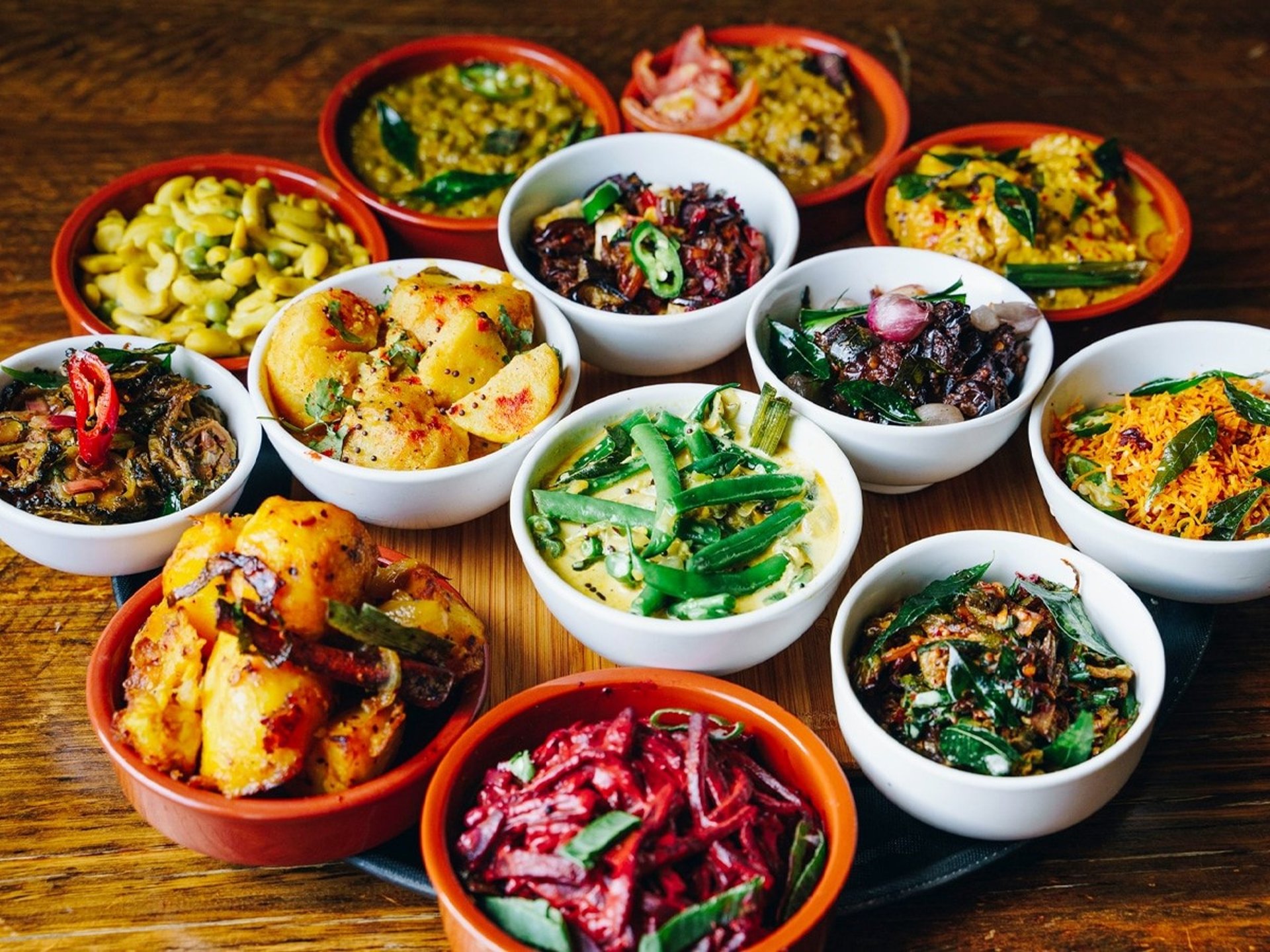
A typical rice and curry plate includes steamed rice at the center, one main protein curry such as fish curry or chicken curry, two or three vegetable curries like pumpkin curry or potato curry, a mandatory dhal curry made with red lentils and coconut milk, and at least one sambol for brightness. This structure creates textural contrast in every bite.

Traditional Sri Lankan rice and curry plate with multiple vegetable curries, dhal, sambols and rice
A classic Sri Lankan rice and curry plate showing the balance of flavors and textures.

This same approach translates directly to event catering. For wedding catering or corporate catering in the Portland area, we build buffets that mirror this home-style format. Guests customize their plates with proteins, vegetable sides, and sambols, which reduces waste and lets everyone find their comfort level with heat and richness.

How did Sri Lankan cuisine develop its own identity?

Sri Lankan cuisine blends ancient island ingredients with influences from South India, Arab traders, and European colonizers, but it evolved its own techniques and flavor profiles over centuries. Trade routes and colonial rule introduced new ingredients, yet Sri Lankans adapted these into something uniquely their own.

The main cultural influences shape different aspects of the cuisine:

TraditionContribution
Sinhalese BuddhistVegetarian dishes, rice cultivation, temple food traditions
Tamil Hindu (Jaffna)Spicier curries, dried fish, goat dishes, Jaffna curry powder
MuslimRicher meat dishes, biryanis, festive foods
Burgher (Eurasian)Lamprais (banana leaf rice parcels), baked goods, Dutch-influenced dishes

Key ingredients arrived through trade: Ceylon cinnamon endemic to the island's wet zone, black pepper, cloves, cardamom, and Maldive fish (smoked tuna flakes from nearby Maldives) that adds umami to sambols and curries. These became essential to the local cuisine.

Growing up in Colombo, he remembers New Year's tables filled with kiribath (milk rice) cut into diamond shapes, kokis fried crisp and golden, and homemade Sri Lankan sweets passed between neighbors. Every family had their own recipes, their own spice roasting methods, their own way of making pol sambol. That personal variation is part of what makes Sri Lankan food so alive.

This layered history makes Sri Lankan food especially interesting for food-focused events. Guests often recognize familiar notes from Indian food or Southeast Asian cuisine, yet discover dishes and techniques that feel genuinely new. For adventurous diners in Portland, it offers both comfort and discovery.

What ingredients and flavors define Sri Lankan food?

Sri Lankan flavors come from coconut in multiple forms, fresh aromatics like curry leaves and pandan, and carefully toasted spice blends. The result is layered rather than one-note heat, with toasty, citrusy, and creamy notes building together.

Core pantry elements include rice (red, white, and samba varieties), coconut milk, grated coconut, desiccated coconut, and coconut oil, red and green fresh chili peppers, curry leaves (30-40 leaves per curry for citrusy brightness), pandan leaves (rampe) for grassy perfume, lemongrass, garlic, ginger, and shallots, and goraka (dried garcinia fruit for souring).

Roasted rice flour mixed with grated coconut is a key preparation for traditional dishes like pittu, where the combination is steamed to create a unique, crumbly texture and rich, nutty flavor.

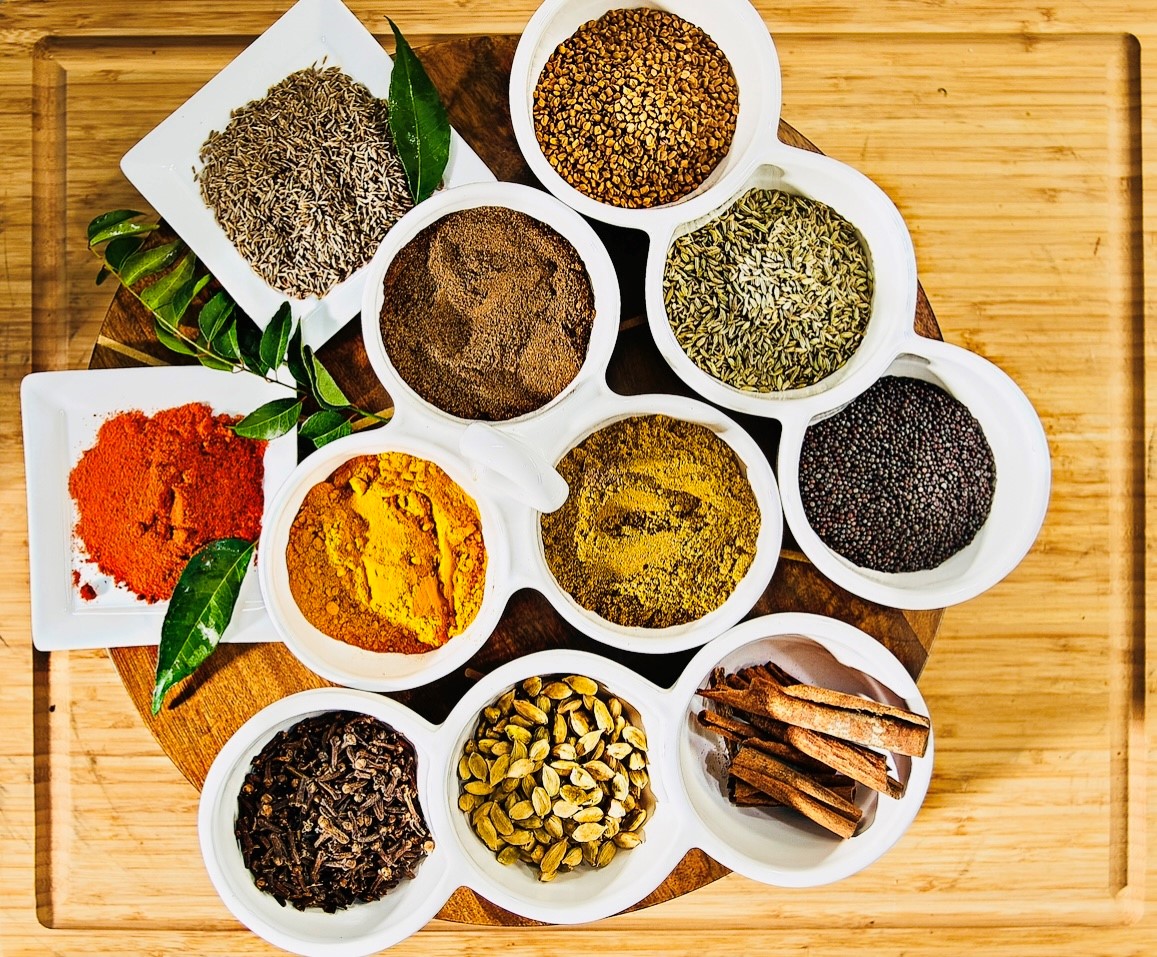
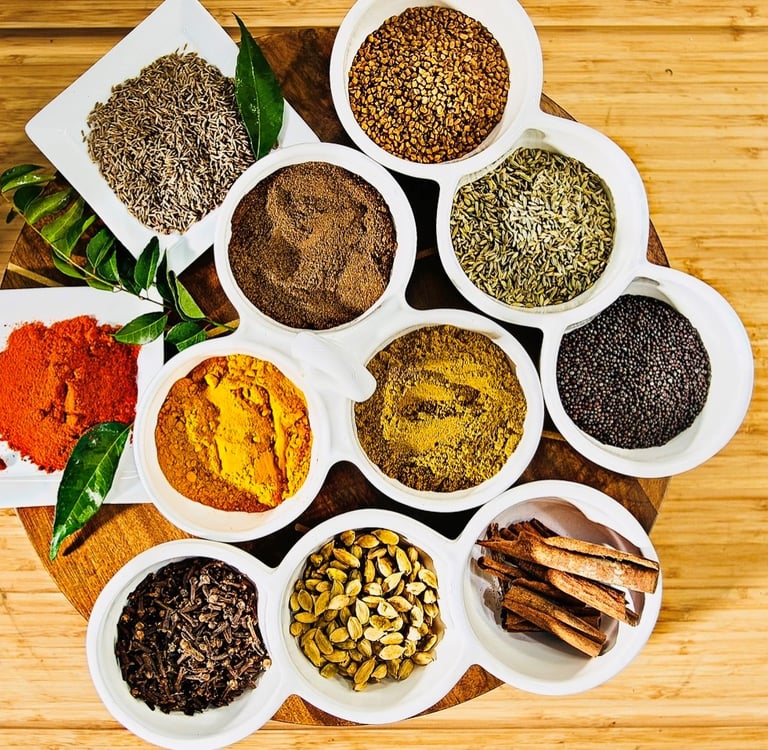
Signature spices include Ceylon cinnamon, black pepper, cardamom, cloves, turmeric, fennel, mustard seeds, and fenugreek. These split into two main blends: roasted curry powder for meats and darker curries, and raw curry powder for vegetables and lentils.

Roasted curry powder goes into dishes like kukul mas chicken curry, creating a dark, smoky gravy. Raw curry powder suits dhal curry and vegetable dishes, producing brighter, earthier notes. The difference is distinct: roasted smells toasty with cinnamon-forward warmth, while raw curry powder carries fresh turmeric and pandan.

Maldive fish provides fermented umami in traditional sambols and curries. At Taste of Pearl, we prepare fish-free versions for vegetarian and vegan guests, using other techniques to build that savory depth.

Essential Sri Lankan Pantry Staples

Coconut

Used as milk, grated flesh, oil and treacle in nearly every dish.

Curry Leaves

Fresh leaves that provide citrus brightness when tempered in hot oil.

Roasted Curry Powder

House-blended spices toasted to create deep, warm flavor.

How important is coconut in Sri Lankan cooking?

Coconut is to Sri Lanka what dairy is to France: it appears in nearly every meal in multiple forms. Many Sri Lankans cannot imagine eating rice without at least one coconut-based element on the plate.

Uses span the entire kitchen: coconut milk thickens curries like parippu (lentil curry) and gives them creamy richness, grated coconut (fresh coconut, scraped coconut) forms the base of pol sambol and mallum, coconut oil provides high-smoke-point frying for kottu roti, deep fried cutlets, and tempering spices, coconut treacle sweetens traditional Sri Lankan sweets, and king coconut water serves as a common drink on the island.

At events, we sometimes offer fresh coconut-based drinks to mirror that island brightness. Many dishes on our full menu are naturally dairy free and gluten free because of this coconut base. For mixed-diet guest lists, this simplifies planning considerably.

Fresh coconuts and coconut products used in Sri Lankan cooking including milk, grated coconut and oil
Coconut appears in almost every Sri Lankan dish in multiple forms.

What makes Sri Lankan spice blends different?

Sri Lankan spice blends rely on toasting and grinding whole spices, often at home, which creates deep, smoky, and citrusy notes distinct from pre-ground commercial powders. The roasting transforms the spices completely.

A typical home-style roasted curry powder might include coriander seeds (40 percent), cumin (20 percent), fennel seeds (15 percent), cardamom (5 percent), cloves (5 percent), Ceylon cinnamon (5 percent), black pepper (5 percent), and dried chiles (5 percent).

These toast dry in a pan until aromatic, 2-5 minutes, then get ground fresh. The sound shifts from a sizzle to a pop, the color darkens, and the smell changes from raw to nutty and warm.

He learned to recognize when spices are toasted by sound and smell rather than a timer. The coriander pops, the cumin releases its earthy perfume, and the chili powder turns a deeper red. These cues matter more than any recipe. That instinct, built over years of Sri Lankan cooking in his family's kitchen, is something he brings to every batch we make here in Oregon.

Chef Kal's Tip
Toast spices by sound and smell rather than time. The coriander will pop and the aroma will shift from raw to warm and nutty.

How does rice and curry work in everyday Sri Lankan meals?

Rice and curry is not one dish but a complete mixed plate of rice, several curries, and condiments eaten together. Many Sri Lankans eat rice at least once daily, often for lunch, mixing everything on their plate for contrasting flavors and textures in each bite.

A common lunch in Colombo might include rice (200-300g), a main curry such as fish curry, chicken curry, or jackfruit curry, two or three vegetable curries like beetroot curry, carrot curry, or eggplant curry, parippu (red lentil curry with coconut milk), pol sambol (coconut relish) or lunu miris (spicy onion relish), and papadam for crunch.

The textures matter as much as the flavors. Creamy lentils cut the heat of spicy curries. Crunchy papadam contrasts with soft rice. Sour pickle balances rich coconut. Everything gets mixed on the plate.

At Taste of Pearl, we build catering services around this same principle. A rich main curry pairs with milder vegetable sides so guests can control their own heat and richness. For corporate catering, we create labeled buffet layouts so guests new to Sri Lankan food can build their plates confidently.

What are sambols, pickles, and other key side dishes?

Sambols and pickles are the small bowls that make a Sri Lankan table come alive. They add brightness, heat, crunch, and acidity to balance richer curries.

Key sambols include pol sambol, fresh grated coconut mixed with red chili powder, lime juice, onion, and salt. It takes 10 minutes to make and pairs with hoppers, roti, or rice. Lunu miris is chopped onion, green chili peppers, Maldive fish, and lime. It is fiery and bright. Seeni sambol is slow-caramelized onions in coconut vinegar, jaggery, and chiles. It is sweet-sour and takes 45 minutes.

Vegetable sides include mallum (shredded greens like gotukola with shredded coconut and lime) and tempered vegetables (green beans or other vegetables quick-fried with mustard seeds, fried curry leaves, and green chiles).

These sides work perfectly for family-style spreads at private event catering and wedding catering. Guests can take what appeals to them, and the variety keeps the meal interesting.

Fresh pol sambol made with grated coconut, chili, lime and onion
Pol sambol adds brightness and texture to every Sri Lankan meal.

What are classic Sri Lankan curries and mains?

Sri Lankan curries range from fiery and dark to mild and coconut-creamy. They feature meats, seafood, vegetables, fruits, and even flowers, each cooked to bring out different spice profiles. The variety within Sri Lankan dishes surprises most first-time diners.

Categories include everyday home curries like kukul mas (chicken curry), parippu (lentil curry), and pumpkin curry, special occasion curries like black pork or beef curry (dark roasted spices), crab curry, and prawn curry, regional (Jaffna) curries like Jaffna curry (goat, dried fish) with intensely spiced, thinner broths, and fruit-based curries like pineapple curry and ambarella curry (sweet-sour).

At Taste of Pearl, we adjust chili powder heat for Portland palates without removing the core spice profile or aroma. The spices still toast, the curry leaves still crackle, and the coconut milk still enriches. We simply pull back on chili peppers for those who prefer less burn.

Explore our full menu for a detailed list of curries and mains we offer locally.

Key Points About Sri Lankan Curries
  • Curries range from mild coconut-based vegetable dishes to dark roasted meat curries
  • Many traditional curries are naturally vegan or vegetarian
  • Heat level can be adjusted while preserving authentic spice aroma
  • Jackfruit curry offers a satisfying plant-based option with meat-like texture

What meat and seafood curries are most traditional?

Sri Lanka's 1,300km coastline and diverse cultural influences give the country a strong seafood curries and meat curry tradition. Coastal communities rely on fish, crab, and prawns, while Muslim and Tamil populations brought rich goat and beef preparations.

Common meat and seafood curries include kukul mas (chicken curry), chicken thighs cooked with roasted curry powder, pandan, and coconut milk for 45-60 minutes. It is eaten daily in many Colombo homes. Fish curry has various preparations including ambul thiyal (sour black tuna with goraka) that preserves 2-3 days without refrigeration. Crab curry and prawn curry are shell-on, cooked with ginger, garlic, and chili peppers. They are reserved for celebrations. Mixed meat curry and black pork curry use dark roasted spices and vinegar for special-occasion richness.

Beef is less common in Buddhist households, though Muslim versions are rich and flavorful. Fried chicken also appears, often with crispy fried curry leaves.

Seafood curries work especially well for summer weddings and company parties in the Pacific Northwest, where guests appreciate fresh flavors and lighter proteins.

What vegetarian and vegan curries are common?

Sri Lankan cuisine naturally offers many vegetarian and vegan dishes. Buddhist dietary traditions, tropical abundance, and the versatility of coconut mean that 30-40 percent of a typical Sri Lankan diet can be entirely plant-based.

Core vegetarian curries include parippu (dhal curry), red lentils simmered with raw curry powder, turmeric, and coconut milk. It is creamy and essential. Polos curry (young jackfruit curry) is young jackfruit cooked with spices until tender. The texture resembles pulled pork. Pumpkin curry, potato curry, and carrot curry are mild, turmeric-forward, and comforting. Gotukola sambol is pennywort greens mixed with coconut, fresh and herbal. Mukunuwenna mallum is leafy greens with scraped coconut.

Jackfruit deserves special attention. Young jackfruit curry has a fibrous, meaty texture that satisfies even committed carnivores. Mature jackfruit is softer and sweeter, used differently in cooking. Both appear in traditional Sri Lankan food.

This variety makes it simple for Taste of Pearl to build fully plant-based menus for corporate catering and private event catering. No substitutions needed, just authentic Sri Lankan recipes.

Are there fruit and special regional curries?

Sri Lankans cook fruits and unusual plant parts in savory curries, which often surprises guests new to the cuisine. Tropical fruits become savory when balanced with goraka, tamarind, or roasted spices.

Examples include pineapple curry, which is sweet-heat with roasted spices and unexpected and memorable, ambarella curry (hog plum cooked sweet-sour), banana flower curry with unique texture tempered with spices, and lotus root curry which is crunchy and absorbs curry flavors.

Jaffna-style Tamil curries deserve their own mention. These northern dishes run spicier and more intensely flavored, often using crab, goat, or dried fish with special spice mixes. A Jaffna curry powder differs from the standard Colombo version.

For special tasting menus in Portland when guests want deeper exploration, I sometimes draw on these regional styles. It lets adventurous diners experience the full range of Sri Lankan cooking.

What does a typical Sri Lankan breakfast look like?

A Sri Lankan breakfast is hot, savory, and often based on rice flour, coconut, and fermented batters. Unlike Western breakfasts, these dishes pair with curries and spicy sambols rather than syrup or jam.

Core breakfast items include hoppers (appa), fermented rice and coconut batter cooked in small iron pans. They are bowl-shaped with crisp edges and a soft center. Egg hoppers have a runny egg cracked into the center. String hoppers (indiappa) are rice flour noodles pressed through a mold and steamed into small nest-like rounds. They are light and perfect for soaking up curry. Kiribath (milk rice) is rice cooked with coconut milk until thick, cut into diamonds. It is traditional for New Year and celebrations. Pol roti (coconut roti) is flatbread made with wheat flour and grated coconut. It is dense and satisfying.

At Taste of Pearl, we sometimes adapt these into brunch-style spreads or breakfast-for-dinner stations for weddings and weekend events. A hopper station with egg fried to order and sambols on the side creates memorable moments.

Sri Lankan Breakfast Favorites

Hoppers (Appa)

Bowl-shaped rice flour pancakes with crisp edges and a soft center. Add an egg for the classic egg hopper.

String Hoppers

Delicate steamed rice noodle nests. Light and perfect for soaking up coconut curry.

Kiribath (Milk Rice)

Rice cooked thick with coconut milk and cut into diamonds. Traditional for celebrations and New Year.

What are hoppers and string hoppers exactly?

Hoppers are fermented rice flour and coconut milk pancakes cooked in small rounded pans, producing crisp lacy edges and a soft, spongy center. The batter ferments 8-12 hours for a subtle tang. The shape resembles a bowl, perfect for holding curry or a runny egg.

Egg hoppers crack an egg into the center mid-cook. The yolk stays runny, mixing with pol sambol and lunu miris for an iconic combination of rich yolk, fresh coconut, and chili peppers.

String hoppers are entirely different. Rice flour mixed with water gets pressed through a mold, creating thin noodles that steam into flat rounds. They are light (about 20g carbs per serving), almost lacy, and designed to soak up curry. Served with dhal curry and a coconut relish, they become a complete meal.

He learned to swirl hopper batter perfectly in iron pans as a child, watching his grandmother's wrist turn just so. The pan tilts, the batter climbs the sides, and steam does the rest. He now recreates that technique here in Oregon, teaching the same motions to our kitchen team.

Freshly cooked hoppers with egg and pol sambol on a plate
Hoppers are a beloved Sri Lankan breakfast and brunch item.

What breads and short eats do Sri Lankans enjoy?

Short eats are Sri Lankan snacks sold at tea shops, bakeries, and street stalls from midday onward. The term covers a range of savory pastries, fritters, and fried items, often eaten with milk tea or chili sauce.

Common short eats include kottu roti, godamba flatbread chopped on a griddle with vegetables, egg fried into the mix, and optional chicken or mixed meats. The signature chop-chop-chop sound draws crowds. Fish cutlets are deep fried croquettes with spiced fish and potato. Vadai are lentil fritters, crispy outside and soft within. Patties and samosas are flaky pastry with vegetable or meat fillings. Vegetable roti are stuffed flatbread pockets.

Kottu roti serves as late-night food across Sri Lanka. The dramatic sound of metal blades chopping on the flat griddle is part of the experience.

Breads like roast paan and pol roti pair well with curries and sambols. For events, these can become passed appetizers.

At Taste of Pearl, we often include short eats as bite-sized starters for cocktail hours and corporate receptions. They introduce guests to Sri Lankan flavors in approachable, one-bite formats.

Event Planning Tip

Short eats like fish cutlets, vadai, and vegetable patties make ideal passed appetizers during cocktail hour. They introduce guests to Sri Lankan flavors in familiar, one-bite formats before the main curry spread. Ask about our short eats add-on when planning your catering menu.

What Sri Lankan desserts and drinks should you know?

Sri Lankan sweets lean on coconut, jaggery (unrefined palm sugar), and warm spices like cardamom and nutmeg. Drinks highlight Ceylon tea, coconut water, and tropical fruit juices.

Traditional Sri Lankan sweets include watalappan, steamed coconut custard with jaggery, cardamom, and kitul palm treacle. It is rich and custardy, often served at holidays and weddings. Buffalo curd with kithul treacle is tangy, thick curd drizzled with palm treacle. It balances sour and sweet. Milk toffee and coconut toffee are fudgy and sweet. Love cake is semolina, desiccated coconut, and spices baked into a dense, fragrant cake.

Key drinks include Ceylon tea (strong black tea with milk and sugar), ginger tea (aids digestion after heavy meals), king coconut water (sweeter and more refreshing than green coconut), and woodapple juice (tart, unusual).

For wedding catering, dessert portions can be served small and elegant. For casual private event catering, we offer more rustic, shared platters.

Why is Ceylon tea so central to Sri Lankan food culture?

Sri Lanka ranks among the world's leading tea producers, with about 300,000 tons annually. Ceylon tea is served at almost every social visit, offered to guests the moment they arrive. Refusing tea is nearly impolite.

Typical ways of drinking tea include strong black tea with milk and sugar (the default), ginger tea after meals for digestion, plain tea alongside Sri Lankan sweets, and iced versions less common but growing.

In his Colombo home, tea was poured all day. Morning tea with biscuits. Afternoon tea with kiri toffee. Evening tea with short eats. The kettle rarely cooled. That constant hospitality carries into how we approach events.

At many Taste of Pearl events, we offer Ceylon tea service alongside the meal. It pairs naturally with spiced curries and coconut desserts, providing a warm close to the meal for those with a sweet tooth.

How is Sri Lankan food adapted for events in the Portland metro area?

Taste of Pearl keeps the core flavors and cooking methods authentic, then adjusts heat level, menu balance, and presentation for local events. The spices still roast. The coconut still enriches. The sambols still brighten. We simply meet Portland palates where they are.

Our adaptations include offering two heat levels of the same curry (mild and home-level), labeling allergens clearly at buffet stations, providing both meat and plant-based mains for mixed groups, and adjusting chile heat by about 50 percent for general audiences while preserving aroma.

Service styles vary by event. Buffet rice and curry spread works for weddings, company parties, and large gatherings. Plated multi-course dinner suits intimate celebrations and formal events. Short-eat stations with kottu are ideal for cocktail hours and interactive receptions. Hopper stations work for brunch events and unique wedding stations.

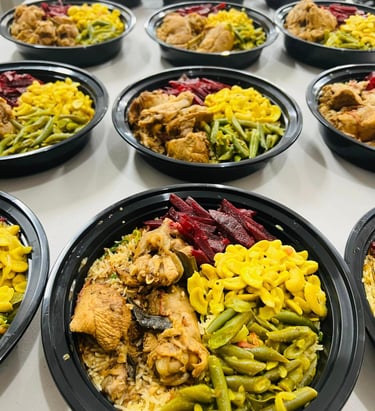
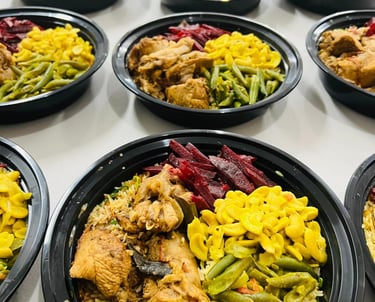
Many clients first try Sri Lankan food through our Wednesday dinner box before choosing dishes for larger catering services. It removes the guesswork. Browse our event gallery for real-life examples of Sri Lankan menus at Oregon celebrations.

1
Tell us about your event. Share your guest count, date, venue, and any dietary needs or preferences.
2
We design your custom menu. Chef Kal builds a Sri Lankan spread tailored to your guests, balancing familiar flavors with adventurous options.
3
We handle everything. Our team arrives, sets up the full spread, serves your guests, and cleans up after. You just enjoy.

What are good starter dishes if your guests are new to Sri Lankan food?

Mild coconut-based curries, grilled or baked meats with lighter sauces, and plenty of sambols and salads help ease guests into Sri Lankan flavors. Start gentle, then let curious guests explore.

A sample beginner-friendly event menu includes chicken curry with moderate heat, parippu (lentil curry, naturally mild and creamy), pumpkin curry (sweet, turmeric-forward), pol sambol (fresh coconut relish), seeni sambol (sweet caramelized onion), and papadam for crunch.

Interactive stations like hoppers or kottu get guests curious without overwhelming them. They watch the cooking happen, smell the spices, and choose their own toppings.

He often consults with couples and planners to match dishes to their guests' comfort level and cultural background. A Sri Lankan wedding with family from Colombo looks different from a Portland corporate lunch introducing the cuisine for the first time. Both can be authentic. Both can work.

Who is behind Taste of Pearl's Sri Lankan food in Oregon?

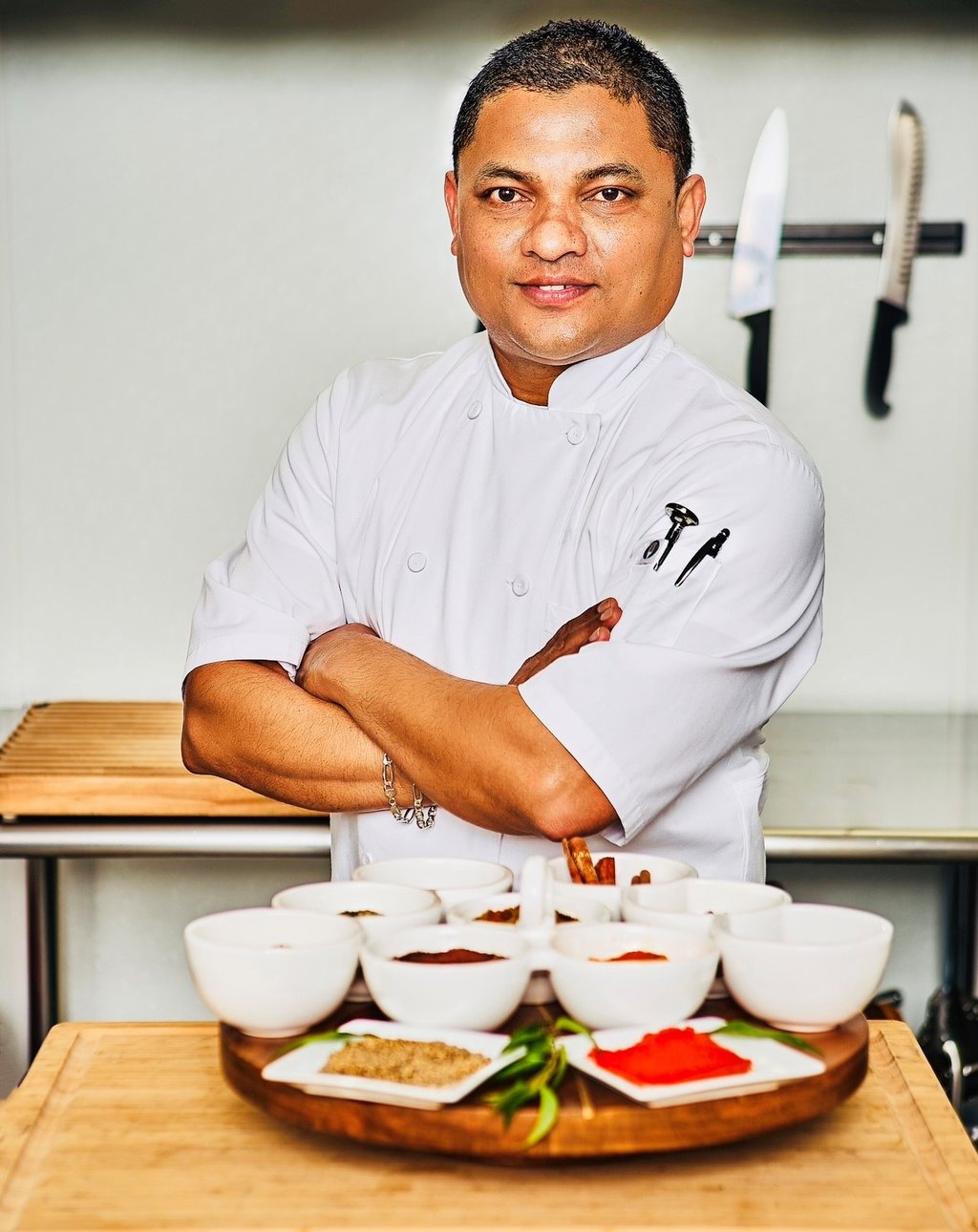
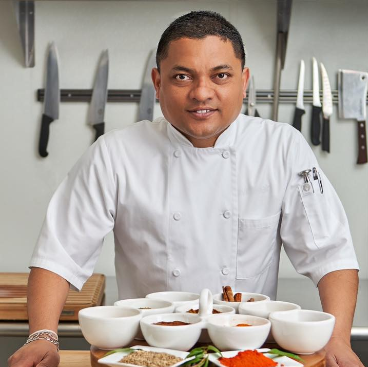
Taste of Pearl is led by Chef Kal Peiris, who grew up in Colombo and has cooked professionally for over twenty years. The business operates as an Asian and women-owned company, run by Chef Kal and Lacey from our base in Hillsboro, serving the greater Portland metro area.

His background in Sri Lankan cooking started in family kitchens, learning from elders who never measured anything. Spice blends by feel. Coconut milk by taste. Curry leaves by the handful. Later, he adapted those recipes to Pacific Northwest ingredients, sourcing locally when possible and importing essentials when necessary.

All curries, sambols, and short eats are made from scratch in small batches. We roast our own curry powder, grind our own spice blends, and prepare fresh coconut for each event. This attention to traditional technique is what makes the difference between authentic Sri Lankan cooking and generic curry.

In Sri Lanka, we do not eat alone. A meal is always shared. When I cater an event, I bring that same spirit. The table should overflow with color, aroma, and variety. That is what Sri Lankan hospitality looks like.

Chef Kal PeirisFounder, Taste of Pearl

Learn more about Chef Kal and our story, or get a quote for your next event.

Frequently Asked Questions

While many traditional Sri Lankan dishes use chili peppers, the heat is adjustable. The real focus is on layered spice flavor rather than burn. At Taste of Pearl we prepare mild, medium and home-level versions.

Sri Lankan food uses more coconut in all forms, different curry powders with more cinnamon and pepper, and thinner brothier curries. Unique dishes like hoppers, string hoppers and kottu roti have no direct Indian equivalents.

Yes. Many Sri Lankan dishes are naturally rice and coconut based. Parippu, polos curry, pumpkin curry and string hoppers are excellent options. We can create fully plant-based menus for any event.

Rice and curry buffets with multiple vegetable sides, sambols and papadam offer the most flexible format. Short eats like cutlets work well for cocktail hour. These dishes hold well and let guests customize their plates.

Order our Wednesday dinner box to sample curries and sides at home. Review our full menu online and browse the event gallery. We can also arrange a tasting for your specific event size and style.

Written by Chef Kal Peiris, Founder, Taste of Pearl. Sri Lankan-born chef from Colombo with 20 plus years of cooking experience, now catering authentic Sri Lankan food in the Portland metro area. All guidance in this article is based on his direct cooking, family traditions, and years of serving Sri Lankan dishes at weddings and corporate events in Oregon.

Written by Chef Kal Peiris

Head Chef & Founder, Taste of Pearl

Back to Blog